







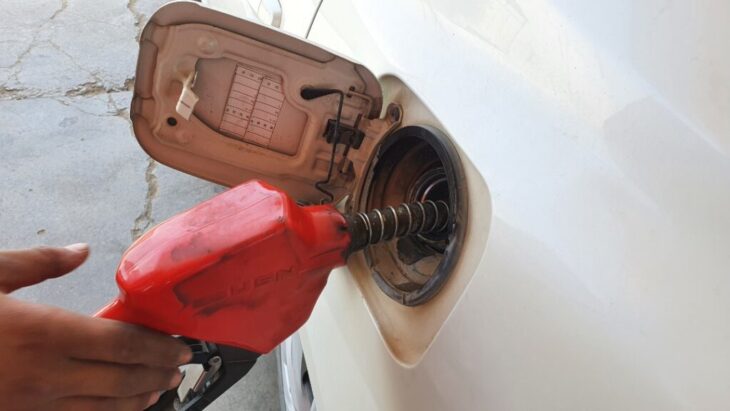

Fuel prices in Kabul city markets have increased by more than 10 percent compared with two days ago. Sellers attribute the rise to developments in the global market and regional tensions, while drivers complain about higher expenses and lower income, calling for serious monitoring of petroleum product prices.
It is worth noting that today, Tuesday, June 30, the price of one liter of petrol is 75 afghanis and one liter of diesel is 70 afghanis. Two days ago, one liter of petrol cost 66 afghanis and one liter of diesel cost 65 afghanis.
Hekmatullah Mohammadi, an employee at a fuel station in Kabul’s Wazirabad area, said the rise in fuel prices was due to the resumption of attacks between the United States and Iran. He said fuel is currently not being imported into Afghanistan from Iran.
He added: “Only the northern route remains, and that road is also damaged; work is ongoing on it. One day tankers are allowed from one side, and another day there are interruptions from the other side. Fuel is only coming through Hairatan. When imports decrease, prices go up.”
Meanwhile, Naqibullah Najim, manager of a fuel station in Kabul’s Shahr-e-Naw area, said that compared with two days ago, petrol has increased by 9 afghanis per liter and diesel by 5 afghanis per liter.
Speaking about the increase in fuel prices, he said: “As is known, oil, fuel and gas do not have fixed prices. The Middle East situation and the Iran-U.S. conflict have a direct impact on them. For this reason, there is no permanent stability; prices are constantly changing. That is why prices have gone up over the past three days.”
He said fuel is part of international trade, and for this reason, oil prices have increased not only in Afghanistan but also globally.
Economic analyst Abdul Nasir Rashtia said tensions and war in the Middle East have caused petroleum prices to rise in global markets. Afghanistan has also been affected by this situation because of its dependence on imports, lack of strategic reserves, limited number of importing companies and high transportation costs.
He added that if tensions end and oil supply increases in global markets, prices may decline. However, in his view, creating a competitive market environment, preventing hoarding and establishing strategic reserves are among the most important solutions for reducing and stabilizing petroleum prices in Afghanistan.
Have petroleum prices really increased globally?
According to information from the Trading Economics website, the global price of one barrel of oil today is 73.8 U.S. dollars, while two days ago the price of one barrel was 74.4 dollars.
The source calls on the government to control petroleum product prices.
Drivers’ Complaints
Saber, a city vehicle driver in Kabul, said: “Fuel prices in Kabul city markets have suddenly increased over the past two days, and we do not know the reason.”
He added: “Under the current conditions, on the one hand there is no work, and on the other hand fuel prices have increased. We do not know whether to first cover fuel expenses or provide a piece of halal bread for our families.”
He called on officials to control fuel prices in the country’s markets.
Mahmood, a city taxi driver, also said: “It is true that fuel prices are high, but there is also unemployment, and this is difficult for people.”
He also urged officials to pay attention to controlling petroleum product prices.
Officials’ Response
Jawad Dabir, head of information at the Ministry of Industry and Commerce, said oil prices generally rose worldwide after the U.S. and Israeli attack on Iran and the subsequent closure of the Strait of Hormuz.
He added, however, that the Ministry of Commerce is trying to bring petroleum product prices down and is therefore in contact with Russia and other countries that have petroleum products in order to increase imports.
Views: 2