





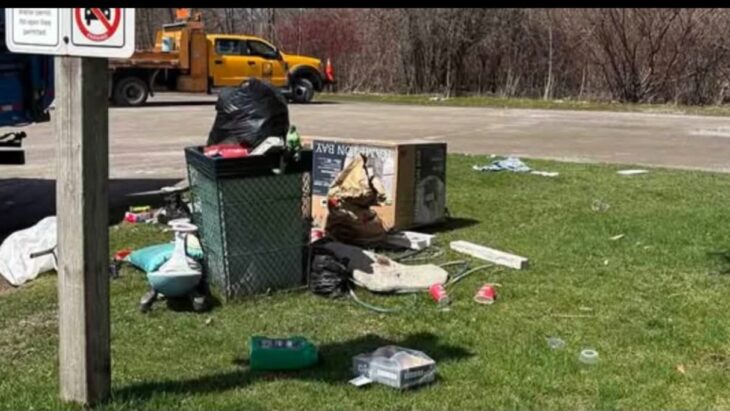

Wesal TV(Whitby): Reports of overflowing garbage bins, broken glass and discarded needles at one Whitby park have renewed calls for more public garbage bins as residents say litter is becoming a growing problem in parks and other public spaces.
At Wednesday’s Whitby council meeting, councillor Victoria Bozinovski said Greenfield Park has become a growing concern for nearby residents and families.
She told the council that residents have repeatedly sent her photos showing piles of garbage, broken glass, discarded needles and other hazardous items in and around the park.
“I’ve never seen so much garbage in my entire life,” Bozinovski told the council, adding that she was “actually shocked” when she looked at photos showing garbage in and around the park.
Bozinovski brought forward a motion asking staff to study replacing the park’s wood-chip playground surface with a safer rubberized surface and report back on the costs, timeline, maintenance and possible funding options. Council approved the motion unanimously.
Residents interviewed by Wesal TV say Greenfield Park reflects a broader issue across Whitby. As the town’s population grows, they say parks and public spaces are coming under increasing pressure, leading to overflowing garbage bins, more litter and a shortage of public garbage bins.
Whitby resident Arman Afzali told Wesal TV that clean parks are important for families.
“When garbage bins are full or there isn’t one nearby, some people take their garbage home, but unfortunately others leave it on the ground.”
Afzali says more garbage bins are needed near playgrounds, bus stops, walking trails and other busy public spaces and wants bins emptied more frequently during the summer months.
Community advocate Zahir Wardak says the problem becomes more noticeable during weekends, when parks are busiest and garbage bins fill up quickly.

“A dirty environment with overflowing garbage bins is not ideal for children and families. People want to enjoy these spaces without worrying about garbage around them.”
Wardak has also used social media to raise awareness about the issue and hopes the town will take practical steps to keep parks cleaner.
The Town of Whitby says it currently has more than 350 garbage bins in parks and along trails, including about 100 high-capacity compacting bins designed to reduce odours, prevent overflowing garbage and discourage illegal dumping.
According to the town, bins in busy parks are emptied daily, while bins in other locations are generally serviced every other day. During the summer, garbage collection is expanded to evenings and weekends.
Staff also inspect parks regularly, respond to public complaints and assess where additional bins may be needed.
The Town also encourages residents to help keep parks clean through its Anti-Litter Cleanup Program. The program allows residents, community groups and businesses to organize litter cleanups or adopt a park or trail to help keep public spaces clean.
Mayor Elizabeth Roy urged residents not to dispose of household garbage in park bins, saying they are intended for people using parks and trails.
Environmental experts say litter is more than just an eyesore. Plastic bottles, food wrappers, cigarette butts and other waste can be carried by wind and rain into storm drains, rivers and Lake Ontario, where they pollute waterways and threaten fish, birds and other wildlife.
Animals can become trapped in plastic or mistake it for food, while plastic breaks down into tiny particles known as microplastics that can remain in the environment for hundreds of years and enter the food chain.
According to Parks Canada, more than eight million tonnes of plastic enter the world’s oceans every year, while Ontario Parks has reported increasing amounts of garbage left behind by visitors.
The agency says litter attracts wildlife, creates safety hazards and damages natural areas, encouraging visitors to use garbage and recycling bins whenever possible or take their waste home if bins are full.
Waste left in public spaces can contaminate soil and waterways, block stormwater systems and harm wildlife.
Illegal dumping and littering have also been an ongoing concern across Durham Region.
The region has warned that dumping garbage in parks, along roadsides or on private property creates health and safety risks and can result in fines of up to $10,000 upon conviction.
The regional municipality encourages residents to report illegal dumping and use curbside collection or waste management facilities instead of leaving waste in public spaces.
Views: 79