









By Mahmood Haqdost, Local Journalism Initiative Reporter
Wesal TV(Whitby): A new Durham Region survey has found overwhelming support for keeping the Regional Chair elected, adding to growing opposition to a provincial law that gives the Ford government the power to appoint the position.
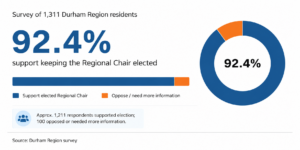
Of the 1,311 residents who participated in the survey, more than 92 per cent said they support electing the Regional Chair, while the remaining respondents either opposed the idea or said they needed more information.
Last month, the Ford government passed the Better Municipal Governance Act, which changes how regional chairs are selected in eight upper-tier municipalities, including Durham, Peel, York, Halton, Niagara, Waterloo, Muskoka and Simcoe County.
Under the legislation, the Minister of Municipal Affairs and Housing can appoint regional chairs and grant them “strong chair” powers similar to those already held by some Ontario mayors.
The Ford government says the law will make regional governments more efficient and help speed up decisions on housing and infrastructure projects.
“We will always support our municipal partners, both lower- and upper-tier, in delivering locally led solutions that offer better value for taxpayers and speed up decision-making,” said Rob Flack, Ontario’s minister of municipal affairs and housing, when the legislation was introduced.
Whitby Mayor Elizabeth Roy said the survey results “send a very clear message” that residents want a direct voice in choosing the Regional Chair.
Roy told Weasal TV the findings show residents want a say in who leads Regional Council and helps guide Durham Region’s future.
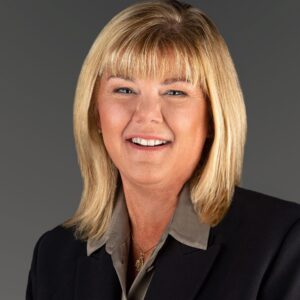
In April, Roy introduced a motion asking the Regional Council to reaffirm its preference that the Regional Chair continue to be elected by residents. Council approved the motion.
Roy said her main concern with an appointed chair is accountability.
“Municipal leaders are strongest when they are directly accountable to the residents they serve,” she said.
She argued that an appointed chair would answer to the provincial government rather than directly to Durham residents.
“Residents deserve a direct voice in selecting the leader who will help guide those decisions,” Roy said.
Current Durham Regional Chair John Henry has also opposed the change.
Following the passage of the legislation in May, Henry said removing the public’s ability to elect the Regional Chair breaks an important connection between residents and regional leadership.
“Democracy is strongest when leadership is earned through public trust, not granted by appointment,” Henry said in a statement.
Henry also pointed to a 2010 Durham referendum in which about 80 per cent of voters supported electing the Regional Chair.
Pegah Mohibzada, a resident of Oshawa, said she is concerned that appointing the Regional Chair would reduce local democracy and accountability.

“I believe that no one can make better decisions for a community than the residents who live there,” Mohibzada told Wesal TV in an email response. “The government should allow residents to choose their Regional Chair through an election.”
The legislation has also drawn criticism from Ontario’s opposition parties.
Ontario NDP MPPs Wayne Gates and Jennie Stevens have described the law as an attack on local democracy and warned it gives too much authority to an unelected official.
The Association of Municipalities of Ontario has also urged the province to reconsider the changes.
The organization argues that decisions about regional leadership should remain in local hands and has described appointing regional chairs and granting them strong-chair powers as “fundamentally undemocratic.”
The association says regional chairs should remain directly accountable to local voters.
Views: 52