







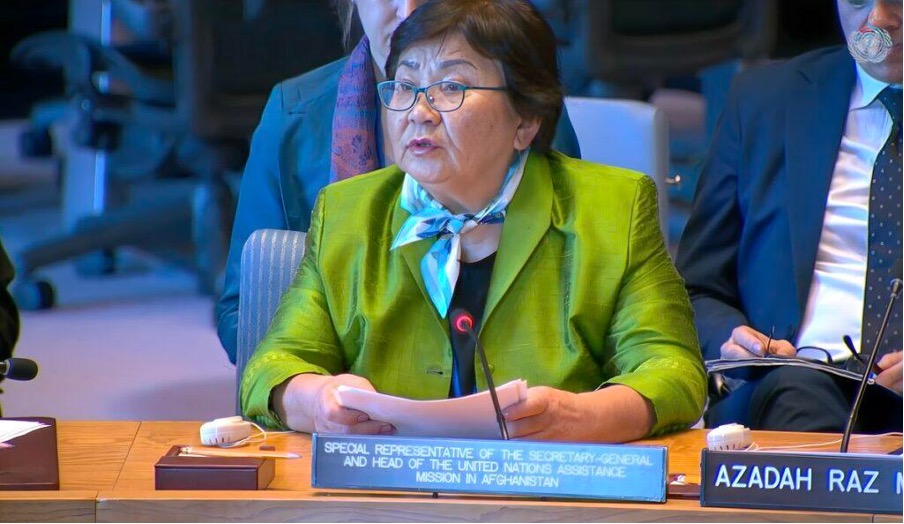

United Nations Special Representative for Afghanistan Roza Otunbayeva has said Afghans continue to face a severe humanitarian crisis.
She said the predicament was characterised by decades of conflict, entrenched poverty, climate-induced shocks, rapid population growth and increasing protection risks, particularly for women and girls.
On Monday, Otunbayeva briefed the UN Security Council on the current situation in Afghanistan.
She emphasised that the most helpful development would be a clear signal from Afghan government officials demonstrating their commitment to reintegrating Afghanistan into the international community.
Otunbayeva recalled in 2025, over 50 per cent of the population, approximately 23 million people, would require humanitarian assistance. However, this aid is rapidly dwindling.
“We look forward to the anticipated renewal of our mandate next week. UNAMA, along with all UN agencies, funds, and programmes, remains fully committed to the goal outlined at the beginning of this briefing: an Afghanistan fully reintegrated into the international system and honouring its international legal obligations, ultimately benefiting the Afghan people,” she explained.
“We remain dedicated to improving the lives of the Afghan people, whose concerns and aspirations must be addressed for genuine peace and stability in Afghanistan.”
Afghanistan’s economy grew by 2.7 per cent in 2024, driven largely by regional investments in infrastructure. However, this modest growth cannot offset the sharp decline in foreign aid or the country’s continued isolation from the international system.
“Lives and livelihoods will be lost, and development gainmes will be further eroded… Here we return to the question of Afghanistan’s international obligations,” she warned.
UNSC members are also scheduled to meet on March 17 to discuss the possibility of extending UNAMA’s mandate for another year.
Earlier, Zabihullah Mujahid, chief spokesman for Taliban, had said the UN mission had not been effective.
Views: 4