







Despite being an agricultural country, Afghanistan’s farmers continue to face significant challenges, primarily due to limited access to markets. This lack of market connectivity results in considerable losses for producers and hampers the overall growth of the agricultural sector.
At the same time, the government struggles to generate meaningful revenue from agricultural production, further exacerbating the country’s financial difficulties.
In recent years, attention has increasingly shifted toward Afghanistan’s vast mineral wealth and its strategic geographic position as a potential transit hub between Central and South Asia.
Analysts believe these sectors hold immense potential to boost national income through trade and help stabilize Afghanistan’s fragile economy.
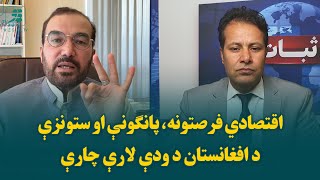
To explore how Afghanistan can increase its Gross Domestic Product (GDP) and government revenue, we spoke with Mr. Mohammad Asif Nang, former Deputy Minister of Education and a respected economic researcher.
Nang is the author of two books on economics, including Economy-Centered Governance, which outlines key economic sectors that if properly developed and supported by sound policies, could significantly enhance Afghanistan’s economic resilience and improve the livelihoods of its citizens.
According to Nang, targeted investment, long-term planning, and inclusive governance are critical for harnessing Afghanistan’s existing capacities and turning potential into sustainable economic growth.
Views: 1