







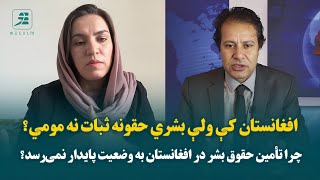
The human rights situation in Afghanistan is under unprecedented pressure, leading to millions of girls over the age of ten being denied access to schools and universities, while hundreds of thousands of others have lost their jobs. This situation has caused widespread despair across the country, with millions of Afghans being forced to flee their homeland.
The hopes of the people under the current ruling regime are dwindling, and their expectations for securing basic human rights are fading. Despite this, the Taliban interpret the situation differently.
However, it appears that international diplomacy has not been effective, and there is little sign of progress in global politics regarding Afghanistan.
Why is it that human rights have failed to achieve stability in Afghanistan, and why does the country experience widespread instability with every regime change?
Over the past 20 years, even with international support, why was the human rights issue not prioritized, and why is it still seen as a Western concern?
To address these questions and others, we spoke with Shabnam Salehi, the former commissioner of Afghanistan’s Independent Human Rights Commission and a professor at the University of Ottawa.
Her insights are shared with you in the “Stability Program.”
Views: 20