




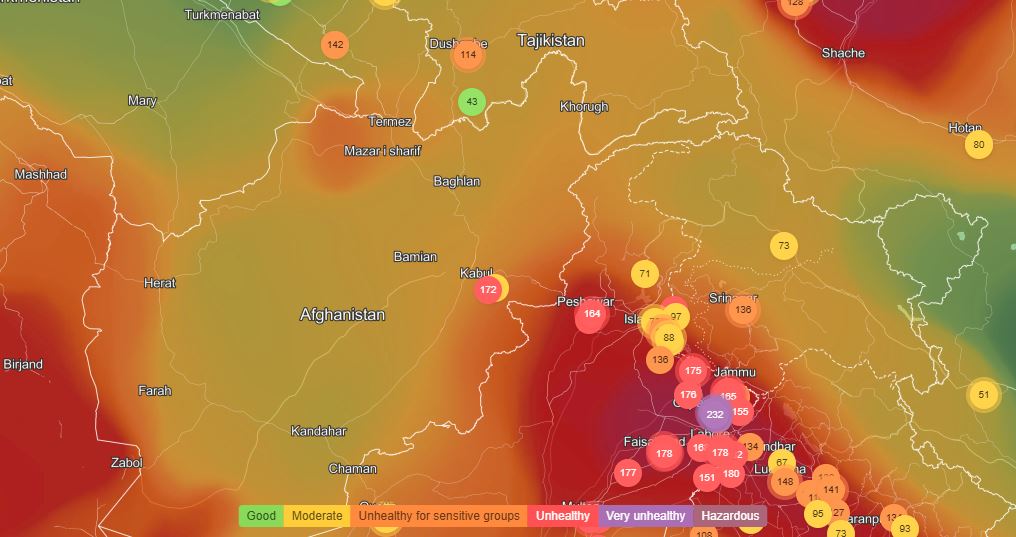
On Thursday morning, October 2, 2025, Kabul was ranked the second most polluted major city in the world, according to the IQAir global air quality index. Lahore, Pakistan, topped the list as the world’s most polluted city on the same day.
The Air Quality Index (AQI) in Kabul rose above 100, falling into the category of “unhealthy for sensitive groups.”IQAir reported that fine particulate matter (PM2.5) concentration in Kabul’s air reached 58 µg/m³, which is 11.6 times higher than the World Health Organization’s annual guideline.
These levels of pollution, experts warn, can trigger respiratory illnesses, worsen heart conditions, and reduce lung function — especially for children, the elderly, and those with pre-existing health vulnerabilities.
Nearby cities including Jalalabad in Afghanistan and Peshawar in Pakistan’s Khyber Pakhtunkhwa province were also affected by severe air pollution at the same time.
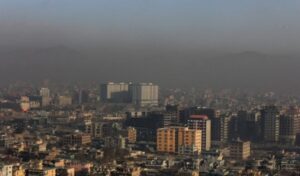
Environmental specialists attribute Kabul’s poor air quality to multiple overlapping factors: aging vehicles with high emissions, households burning refuse such as plastics and rubber for fuel, industrial activity, construction dust, and stagnant atmospheric conditions. Seasonal weather patterns, such as temperature inversions, further trap pollutants near the ground.
Experts have advised residents to limit outdoor activities, wear protective masks, seal windows, and use indoor air purifiers to reduce health risks.
Source: IQAir, October 2, 2025
Views: 7