





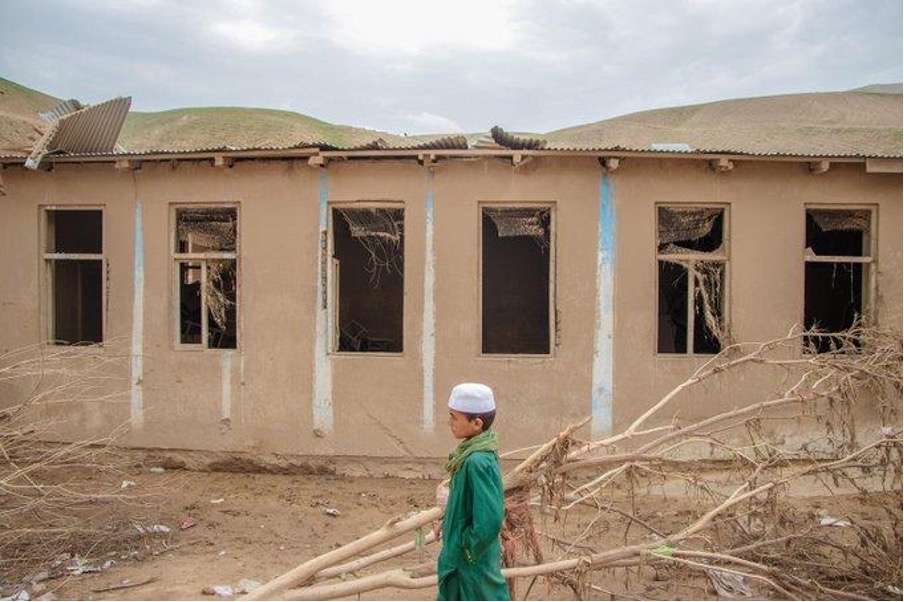
The United Nations Children’s Fund (UNICEF) says that over 110 schools in Afghanistan were either destroyed or damaged due to flash floods in 2024.
A new analysis released by UNICEF on Thursday revealed that at least 242 million students across 85 countries had their education disrupted by extreme climate events in 2024.
These events included heatwaves, tropical cyclones, storms, floods, and droughts, all of which exacerbated the existing global learning crisis.
Some countries faced multiple climate hazards. In Afghanistan, for instance, severe flash floods in May—alongside heatwaves—damaged or destroyed more than 110 schools, leaving thousands of students without access to education.
Heatwaves were the most common climate hazard causing school closures, affecting over 118 million students in April alone. Countries like Bangladesh and the Philippines saw widespread school closures in April, while Cambodia shortened school days by two hours.
In May, temperatures in parts of South Asia reached 47°C (116°F), putting children at risk of heatstroke.
“Children are more vulnerable to the impacts of weather-related crises, including stronger and more frequent heatwaves, storms, droughts, and flooding,” said UNICEF Executive Director Catherine Russell.
“Children’s bodies are uniquely vulnerable. They heat up faster, sweat less efficiently, and cool down more slowly than adults. Children cannot concentrate in classrooms that offer no respite from sweltering heat, and they cannot get to school if the path is flooded or if schools are washed away.”
Russell added that last year, severe weather kept one in seven students out of class, threatening their health and safety and impacting their long-term education.
According to the analysis, South Asia was the hardest-hit region, with 128 million students affected by climate-related school disruptions. East Asia and the Pacific saw 50 million students impacted.
Views: 19